Sunday, 19 September 2010

Clint Eastwood in the 90's+

In 1992 Eastwood surprised everyone by earning himself an Oscar for best director and producer of the best picture and nominated for best actor. Then he took on the secret service in In the Line of Fire (1993), another huge hit. Next up was The Bridges of Madison County (1995), a popular love story with Meryl Streep. Over the next few years, the quality of his films was up and down. He directed and starred in the well-received Absolute Power (1997) and Space Cowboys (2000), and the badly received True Crime (1999) and Blood Work (2002).

However, Eastwood rose to prominence once again, starring opposite Hilary Swank and Morgan Freeman in what is arguably the best film of his career: the boxing drama Million Dollar Baby (2004). A critical and commercial triumph, the movie won the Academy Award for Best Picture, as well as earning Eastwood a nomination for Best Actor and a win for Best Director. After this he took a four-year acting hiatus before starring in Gran Torino (2008). This film grossed $30 million during its opening weekend in 2009, making him the oldest leading man to reach #1 at the box office, and another one of his biggest hits.

After starring in iconic movies for five consecutive decades, Clint Eastwood has proved himself to be the longest-running movie star. Going out on top, he recently said he will likely never act again, though he will continue to direct films.

Clint Eastwood in the 70's and 80's


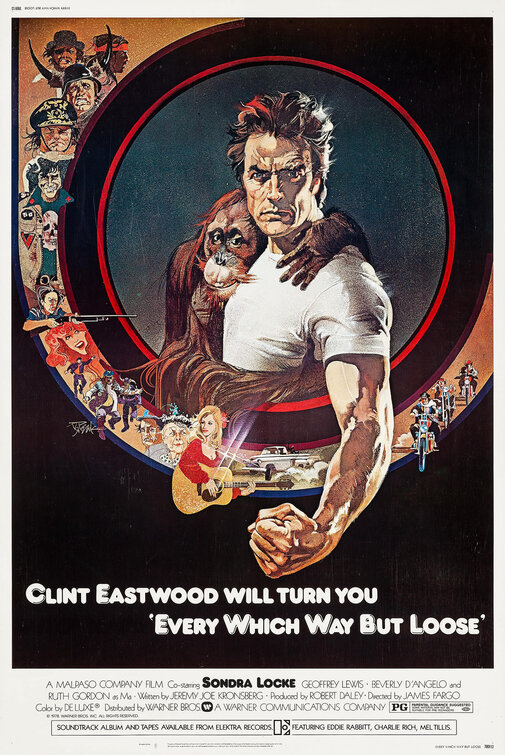
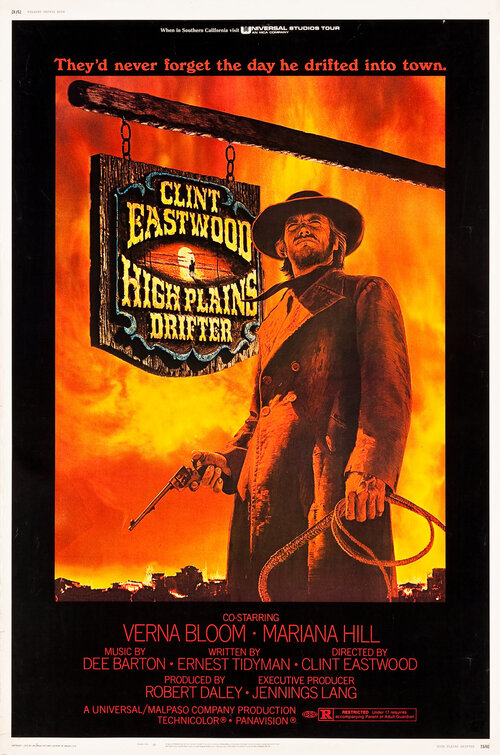
As well as acting Clint Eastwood decided to turn his hand to directing, he directed his first film the thriller Play Misty for Me (1971), in which he played a man being stalked by a crazed female admirer whose obsession with him turns from seductive to violent. That same year, he played the hard edge police inspector in Dirty Harry (1971) that gave Eastwood one of his signature roles and invented the loose-cannon cop genre that has been imitated even to this day. Eastwood also found work in American revisionist westerns like High Plains Drifter (1973), which he also directed. He had constant quality films over the next few years, teaming up with Jeff Bridges in the buddy action flick Thunderbolt and Lightfoot (1974), and starring the "Dirty Harry" sequels Magnum Force (1973) and The Enforcer (1976/I), and the quintessential western The Outlaw Josey Wales (1976), the action flick The Gauntlet (1977), and the hugely successful comedy Every Which Way But Loose (1978) with Clyde the orangutan.

Eastwood found even more solid work with the fact-based thriller Escape from Alcatraz (1979). The sequel to "Every Which Way but Loose", Any Which Way You Can (1980), was also a blockbuster despite negative reviews from critics. It was the fourth 'Dirty Harry' sequel, Sudden Impact (1983) (the highest grossing film of the series) that made him a viable star for the eighties. Clint also starred in Firefox (1982), Tightrope (1984), Pale Rider (1985), and Heartbreak Ridge (1986), which were all big hits but did not become classics. His fifth and final "Dirty Harry" movie, The Dead Pool (1988), was a minor commercial hit but severely panned by critics. Shortly after his career declined with the outright bomb comedy Pink Cadillac (1989) and the disappointing cop adventure The Rookie (1990). It was fairly obvious Eastwood's star was declining as it never had before.

Friday, 17 September 2010

Clint in the 50's and 60's

Clint tried out for many film roles in the 50's without any luck, eventually he was given a minor role by director Jack Arnold in Revenge of the Creature, a film set in the Amazon jungle, which was the sequel to Creature from the Black Lagoon. He got his breakthrough at the end of the decade with the TV series "Rawhide" 1959, where he was a cast member for six years. As Rowdy Yates, he made the show his own and became a household name around the country. In 1964 Eastwood landed a part in A fistful of Dollars, For a Few Dollars More 1965 and The Good the Bad and the Ugly. This is where he found one of his trademark roles, the film was a big hit and he became an instant international star. Eastwood also got roles in Where Eagles Dare (1968), Coogan's Bluff, Hang 'Em High and the musical Paint Your Wagon (1969).

Thursday, 16 September 2010

Pepsi Advertising


Theme to the The Good the Bad and the Ugly


It has to go up there as one of my favourite theme tunes of all time.

Eastwood's Trademark

Trade Mark His characters have a new "trademark expression" in each movie. The same character (e.g., Dirty Harry) will have a different one in each movie. At the end of movies he directs, during the credits the camera will move around the location it was filmed in. then freeze frame for the rest of the credits. Frequently uses shadow lighting in his films. The lead characters in his movie are often outsiders with a dark past they prefer not to remember His movies usually begin and end with the death of a character. His films often deal with the gap between the truth and the mythologized version of the truth (White Hunter Black Heart, Unforgiven, Flags of our Fathers) Often plays characters who are consumed by regrets over past mistakes and are given one chance to redeem themselves (Unforgiven, In the Line of Fire, Million Dollar Baby, Gran Torino) Recurring pattern of his characters is having an unloaded gun or one that misfires. Calm, raspy voice.

Clint Eastwood

Clinton "Clint" Eastwood (born May 31,1930) is renowned American film actor, director, producer and composer. I decided I would have Clint as one of my subjects because he is good, real good at what he does best. He has a string of Academy Awards, Golden Globes, a Screen Actors Guild Lie Achievement Award, Cannes Film Festival Awards and Peoples Choice Awards. Eastwood is known for his anti-hero acting roles in violent action and western films. Following his six-year run on the television series Rawhide (1959–65), he starred as the Man With No Name in the Dollars Trilogy of Spaghetti Westerns in the 1960s, and as Inspector Harry Callahan in the Dirty Harry films in the 1970s and 1980s. These roles have made him an enduring cultural icon of masculinity. Eastwood is also notable for his comedic efforts in Every Which Way But Loose (1978) and its sequel Any Which Way You Can (1980), his two highest-grossing films after adjustment for inflation. For his work in the films Unforgiven (1992) and Million Dollar Baby (2004), Eastwood won Academy Awards for Best Director and for producer of the Best Picture, and received nominations for Best Actor. These films in particular, as well as others including Paint Your Wagon (1969), Play Misty for Me (1971), High Plains Drifter (1973), The Outlaw Josey Wales (1976), Escape from Alcatraz (1979), Pale Rider (1985), In the Line of Fire (1993), and Gran Torino (2008), have all received great critical acclaim and commercial success. He has directed most of his star vehicles as well as films he has not acted in, such as Mystic River (2003) and Letters from Iwo Jima (2006), for which he received Academy Award nominations.